Think back to the Wisconsin summers you’ve enjoyed in years gone by. You might have found yourself at a sporting event, a cookout, or a campfire enjoying a delicious meal. Among all of the various side dishes and snacks, there was probably one common Wisconsin food staple: brats! Foods such as brats are a summertime classic, though many people (myself included!) make them part of their meals all year round.
For generations, pork has been a fixture on our dinner tables. Whether it’s as bratwursts, pork chops, slabs of bacon, barbecue ribs, pulled pork, or ham, Wisconsin pork is more than a food staple. It is a tradition, an industry, and a point of pride. As we celebrate National Pork Month throughout October, let’s revisit the history of pork production in the state and how this tasty product contributes to the strength of Wisconsin’s $116.3 billion agriculture industry.
The historical roots of pork date back to the 1800s. According to the Wisconsin Historical Society, cities like Milwaukee produced over 75% of Wisconsin’s processed meat products by the year 1860. As the Civil War intensified in the early to mid-1860s, Milwaukee also became known as the center for pork processing due to the development and expansion of railroads connecting the city with Chicago.
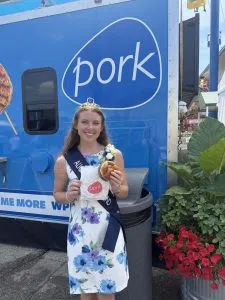
One of Alice in Dairyland’s personal favorites at the Wisconsin State Fair is the Pork Schoppe Trailer Pork Burger. You can find yours next year outside of the Wisconsin Products Pavilion on the northeast corner of the building! (Credit: Alice in Dairyland)
The rise of the meatpacking industry in Wisconsin would not have been possible without early European settlers who emigrated from countries like Germany and Poland. These pioneers introduced pig farming to the Badger State nearly 200 years ago, which also influenced the taste and style of pork products like kielbasa sausage and the iconic bratwurst. This strong foundation for the pork industry in the Midwest paved the way for celebrations like the World’s Largest Brat Fest in Madison and Brat Days in Sheboygan, both of which are time-honored celebrations that recognize the cultural impacts of pork in Wisconsin.
The diversity of pork expands to many other products, including our love for bacon! Bacon is easily identifiable at your local butcher shop or grocery store either in the freezer or at the deli counter. Some of my favorite ways to enjoy bacon include with pancakes on a Saturday morning, on a cheeseburger (with plenty of Wisconsin cheese!), or on my loaded baked potato at the Wisconsin State Fair. Another one of my personal favorites at the Wisconsin State Fair is a Pork Burger from the Pork Schoppe Trailer since it keeps me fueled throughout a busy day! When it comes to trying new and innovative recipes that incorporate pork products, I encourage you to visit pork.org.
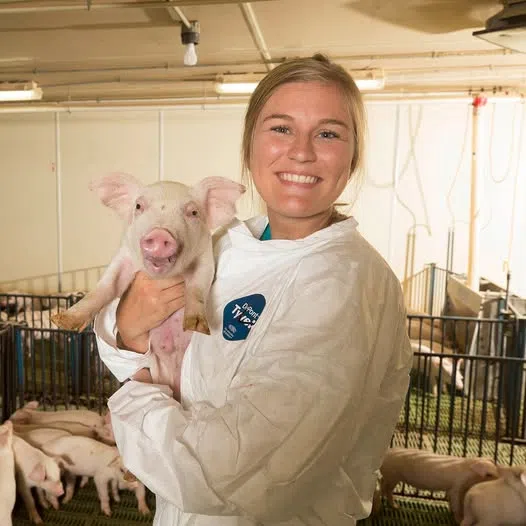
At the heart of Wisconsin’s pork farming industry are the dedicated families who raise their pigs with the utmost respect and care for both their animals and land. Wisconsin is home to over 2,000 pig farms, a large majority of which are family-owned and locally grown for consumption right in your community. Based on data from the Wisconsin Pork Association, “pork uses 75% less land, 25% less water, 7% less energy, and 8% fewer carbon emissions compared to 50 years ago.” To learn more about the sustainability stories behind Wisconsin’s pig farmers, visit wppa.org/sustainability.
Pork is more than a meat product in Wisconsin – it is a culinary and cultural identity that has been shaped by decades of hard work from family farms and sustainable practices. Whether grilled, smoked, slow-roasted, or enjoyed with a bun, pork remains a fundamental part of our lives while contributing to the Wisconsin experience. I am looking forward to deepening my knowledge of Wisconsin’s pork industry during my time as the 78th Alice in Dairyland!





Comments